| Kingdom | Plantae |
| unranked | Angiosperms |
| unranked | Eudicots |
| Order | Arecales |
| Family | Elaeocarpaceae |
| Genus | Elaeocarpus |
| Species | E. ganitrus |
| Binomial name | Elaeocarpus ganitrus Roxb |
Other Common Names:
Rudraksha, Blue Marble Tree, Utrasum Bead Tree, Ganitrus, Bhadraksha, Shiva’s Tears
History
Rudraksha has been revered in India, Nepal, and Southeast Asia for thousands of years, primarily for its spiritual, medicinal, and cultural significance. Ancient Hindu scriptures such as the Shiva Purana, Padma Purana, and Devi Bhagavata Purana describe Rudraksha as originating from the tears of Lord Shiva during deep meditation.
Description
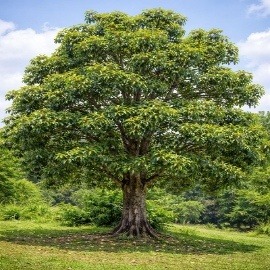
The Rudraksha tree is a large evergreen tree, growing up to 20–30 meters in height under favorable conditions. The trunk is straight with spreading branches forming a dense canopy.
• Bark: Greyish-white, rough, with vertical fissures
• Leaves: Simple, elongated, leathery, glossy green on the upper surface
• Flowers: Small, white to pale yellow, fragrant, appearing in clusters
• Fruit: A round, fleshy drupe, bluish when ripe
• Seed (Rudraksha): Hard, stony endocarp with natural grooves (mukhis or faces)
The number of grooves on the seed determines the mukhi count, ranging from 1 to 21, each associated with specific spiritual and therapeutic benefits.
Range
• India (Himalayan foothills, Assam, Arunachal Pradesh)
• Nepal (most prized variety)
• Bhutan
• Myanmar
• Indonesia
• Malaysia
• Parts of Southeast Asia
Habitat
Rudraksha tree thrives in humid tropical and subtropical climates.
Soil Requirements:
• Deep, well-drained loamy soil
• Slightly acidic to neutral pH (6.0–7.5)
• Rich in organic matter
The tree does not tolerate waterlogging or extreme drought conditions.
Cultivation
Propagation is mainly done through seeds.
• Fruits are collected when fully ripe and soaked in water to remove pulp
• Seeds are sun-dried and sown in nursery beds
• Germination usually begins within 15–30 days
• Seedlings are transplanted after 6–12 months
Vegetative propagation through grafting and tissue culture is also practiced to ensure quality bead production. Rudraksha trees start yielding fruits after 5–7 years.
Flowering Season
Flowering generally occurs during spring to early summer, followed by fruiting in the monsoon season. The fruits take several months to mature fully.
Pests and Diseases
Common issues in Rudraksha tree include:
• Leaf-eating caterpillars
• Scale insects
• Fungal leaf spots
• Root rot in poorly drained soils
Regular pruning, organic pest control, and proper drainage help maintain tree health.
RUDRAKSHA PARTS USED
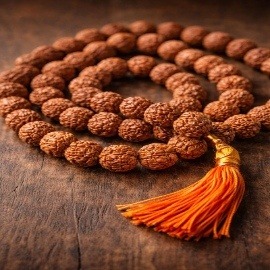
• Seeds (Rudraksha beads)
• Fruits
• Leaves
• Bark
• Roots
Each part has medicinal, spiritual, and commercial value.
RUDRAKSHA In MEDICINE
• Rudraksha beads help reduce stress, anxiety, and hypertension
• Used in managing cardiovascular disorders
• Seeds possess anti-inflammatory and analgesic properties
• Bark decoction is used for fever and infections
• Leaves are applied for wound healing and skin disorders
• Beneficial in epilepsy, insomnia, and nervous disorders
• Enhances concentration and mental clarity during meditation
In Ayurveda, Rudraksha is considered cooling, grounding, and balancing to the nervous system.
Commercial Applications
RUDRAKSHA COMMERCIAL USES
• Beads used for malas, bracelets, and spiritual jewelry
• Extensively used in yoga and meditation practices
• Oils and extracts used in herbal and wellness products
• Wood used for light construction and fuel
• Fruits sometimes used in traditional remedies and dyes
Rudraksha beads are a significant export commodity.
According to astrological and Vedic traditions, the Rudraksha tree is governed by the planet Jupiter (Guru), the planet of wisdom, spirituality, expansion, and higher knowledge. Wearing Rudraksha beads is believed to strengthen Jupiter’s positive influence, enhancing clarity, devotion, learning, and inner balance. Certain mukhis are also associated with other planets, helping in planetary remedies in Vedic astrology.
Rudraksha holds a deeply sacred place in Indian mythology. Ancient legends state that Rudraksha beads were formed from the tears shed by Lord Shiva during intense meditation for the welfare of humanity. Wherever these tears fell, Rudraksha trees emerged, making the tree itself a living symbol of compassion, renunciation, and cosmic consciousness.
It is believed that sages and yogis wore Rudraksha malas to protect themselves from negative energies, evil influences, and planetary afflictions. In many Himalayan regions, Rudraksha trees are considered holy, and cutting them is traditionally discouraged.
In Nepal and parts of North India, Rudraksha beads are ceremonially offered during Mahashivaratri, symbolizing surrender to divine wisdom. Folk traditions also hold that keeping Rudraksha fruits or beads in the home brings peace, prosperity, and spiritual protection.
In Southeast Asian cultures, especially in Indonesia, Rudraksha beads have historically been used not only for prayer but also as protective talismans worn by travelers and traders to ensure safe journeys and success.